
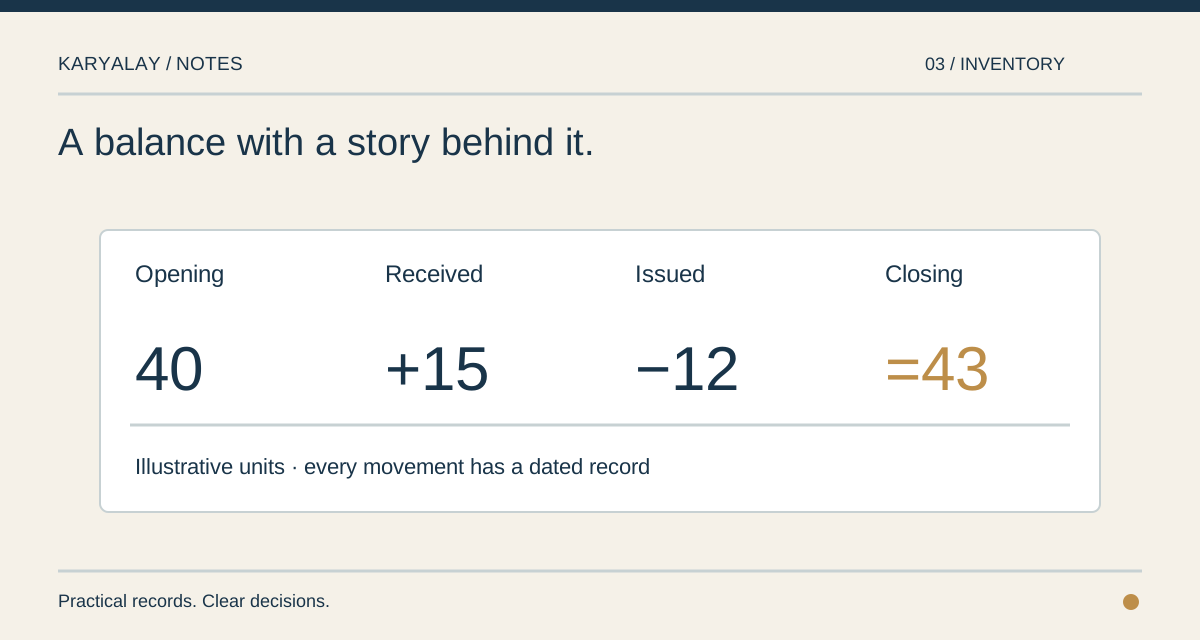
“We have 40” sounds precise until someone asks where the 40 are. Ten may be in one godown, five may be damaged, and another ten may have been promised to an order but not dispatched. A useful stock figure names its place and the event that changed it.
Begin with a consistent item identity and unit. A box and a piece are different quantities, even when they describe the same product. If a purchase is recorded in boxes and a sale in pieces, the conversion has to be explicit. Otherwise the total may look tidy while the shelf disagrees with it.
Every increase or decrease should have a reason: goods received, a sale, a return, a transfer, a count correction. A transfer between two locations is especially easy to get wrong when one side is recorded today and the other tomorrow. The record should show both ends of that movement and who made it.
A physical count is not a failure of the system. It is a check on the system. When the count differs, write down the difference and its cause as far as you know it; do not silently replace yesterday’s number with today’s. That short history tells you whether the recurring problem is receiving, picking, returns or the definition of the item itself.
The aim is not a beautiful dashboard. It is an answer you can defend at the counter: how many can be supplied, from where, and which movements produced that answer.