

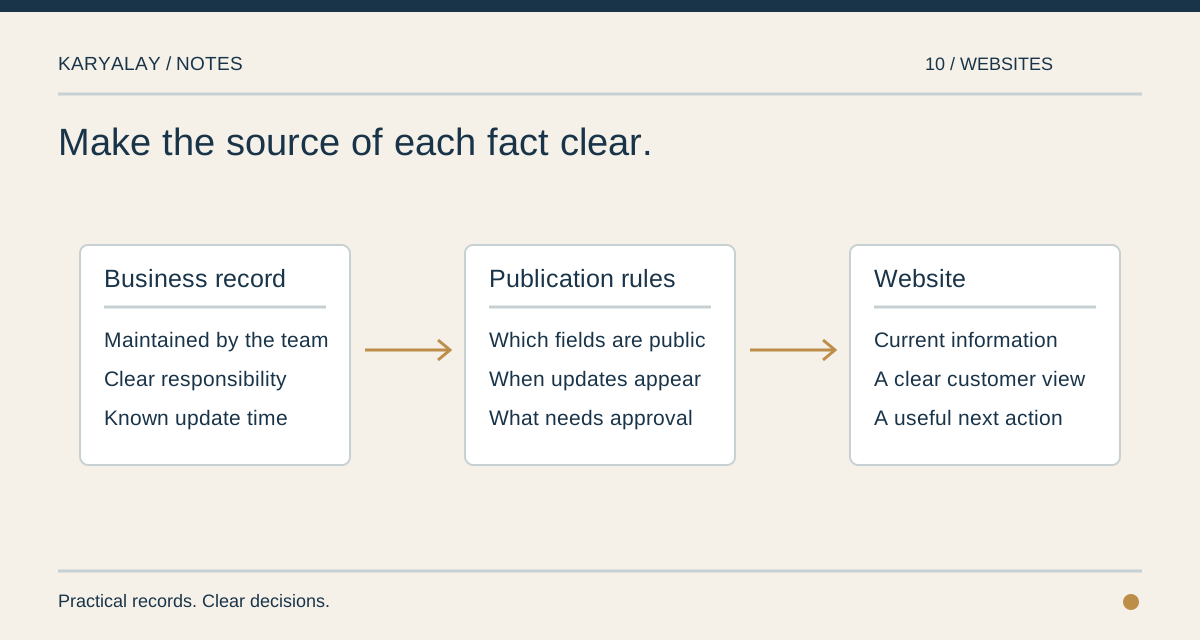
A website can show information that comes from the business’s own records instead of maintaining a second copy. That sounds simple until someone asks which information is current, which parts a visitor can see, and what happens on a day the office cannot be reached.
Start by drawing the direction of each movement. A product name or availability may travel from the office to the site. A customer’s request may travel back from the site to the office. An internal note or a staff-only price should travel nowhere public. These are separate permissions, even when they use the same connection.
Next decide what the site should do with the last good reading. Some public information can remain visible with a clear record of when it was last updated. Anything that must be true at the moment of purchase needs a fresh answer before a basket becomes an order. A cached figure should not be presented as a confirmed promise merely because it is the last figure available.
An error should be visible to the people who can act on it. Record when the last read succeeded, what failed, and what the site is showing in the meantime. A visitor should receive a plain next step rather than an unexplained spinning indicator.
The useful question is not whether the site is “connected.” It is whether a customer and an operator can tell which facts are current, which are waiting, and which actions are safe to take today.